📄 Exam Questions & Readable Text Transcript
Full OCR-extracted text of questions, syllabus codes, and exam instructions.
Extracted Content: 6030q2 Specimen
Page 1
Extracted Text
Candidate Name Centre Number Candidate NumberZIMBABWE SCHOOL EXAMINATIONS COUNCIL
General Certificate of Education Advanced Level
BIOLOGY 6030/2
PAPER 2 THEORY STRUCTURED
SPECIMEN PAPER 1 hour 30 minutes
Additional materials:
Electronic calculator
TIME: 1 hours 30 minutes
INSTRUCTIONS TO CANDIDATES
Write your name, Centre number and candidate number in the spaces at the top of this page.
Answer all questions.
FOR EXAMINER’S USE
Write your answers in the spaces provided on the question paper.
INFORMATION FOR CANDIDATES
The intended number of marks is given in
brackets [ ] at the end of each question or
part question.
S|} c0]~3] | ot) | Oo] DO]
This specimen paper consists of 12 printed pages.
Copyright: Zimbabwe School Examinations Council, Specimen Paper.
@ZIMSEC SPECIMEN PAPER [Turn over
---
Page 2
Extracted Text
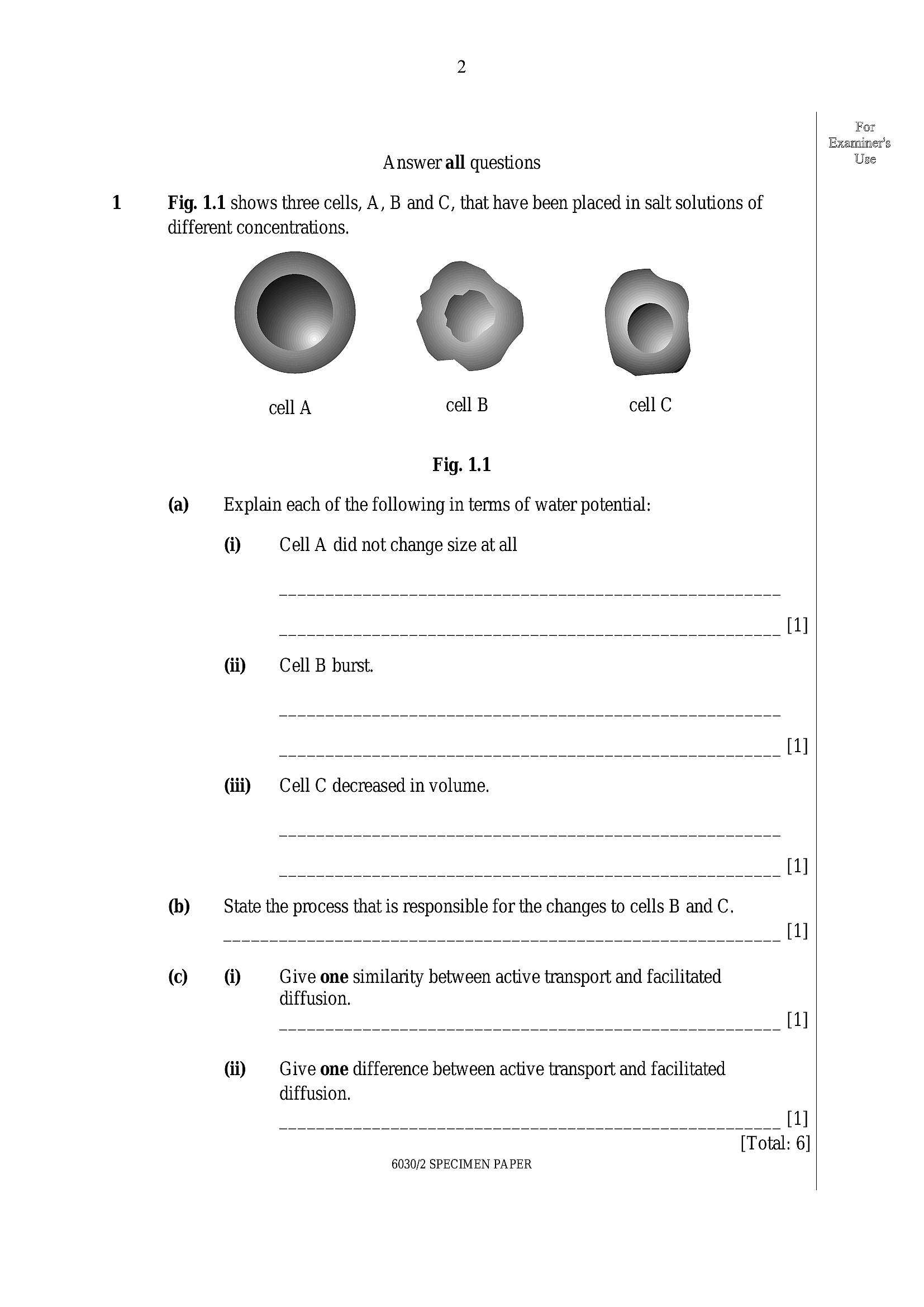
Answer all questionsFig. 1.1 shows three cells, A, B and C, that have been placed in salt solutions of
different concentrations.
cell A cell B cell C
Fig. 1.1
(a) Explain each of the following in terms of water potential:
@ Cell A did not change size at all
(i) Cell B burst.
(iii) | Cell C decreased in volume.
(b) _ State the process that is responsible for the changes to cells B and C.
(©) (1) Give one similarity between active transport and facilitated
diffusion.
(ii) Give one difference between active transport and facilitated
diffusion.
6030/2 SPECIMEN PAPER
For
Examiner's
Use
---
Page 3
Extracted Text
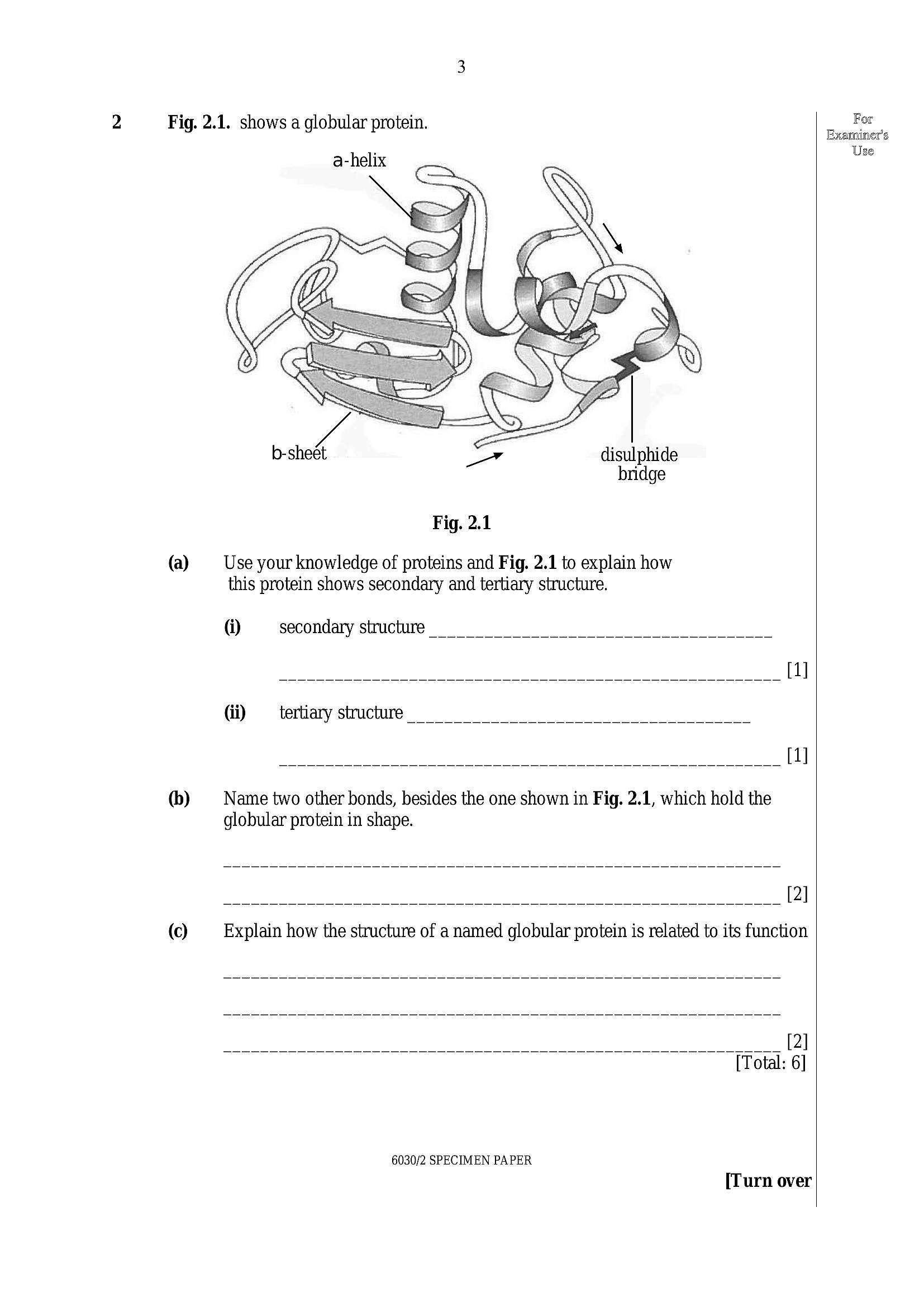
Fig. 2.1. shows a globular protein.(a)
(b)
©
a-helix
b-sheét 7 disulphide
Fig. 2.1
Use your knowledge of proteins and Fig. 2.1 to explain how
this protein shows secondary and tertiary structure.
(1) secondary structure
(ii) _ tertiary structure
Name two other bonds, besides the one shown in Fig. 2.1, which hold the
globular protein in shape.
6030/2 SPECIMEN PAPER
[Turn over
For
Examiner's
Use
---
Page 4
Extracted Text
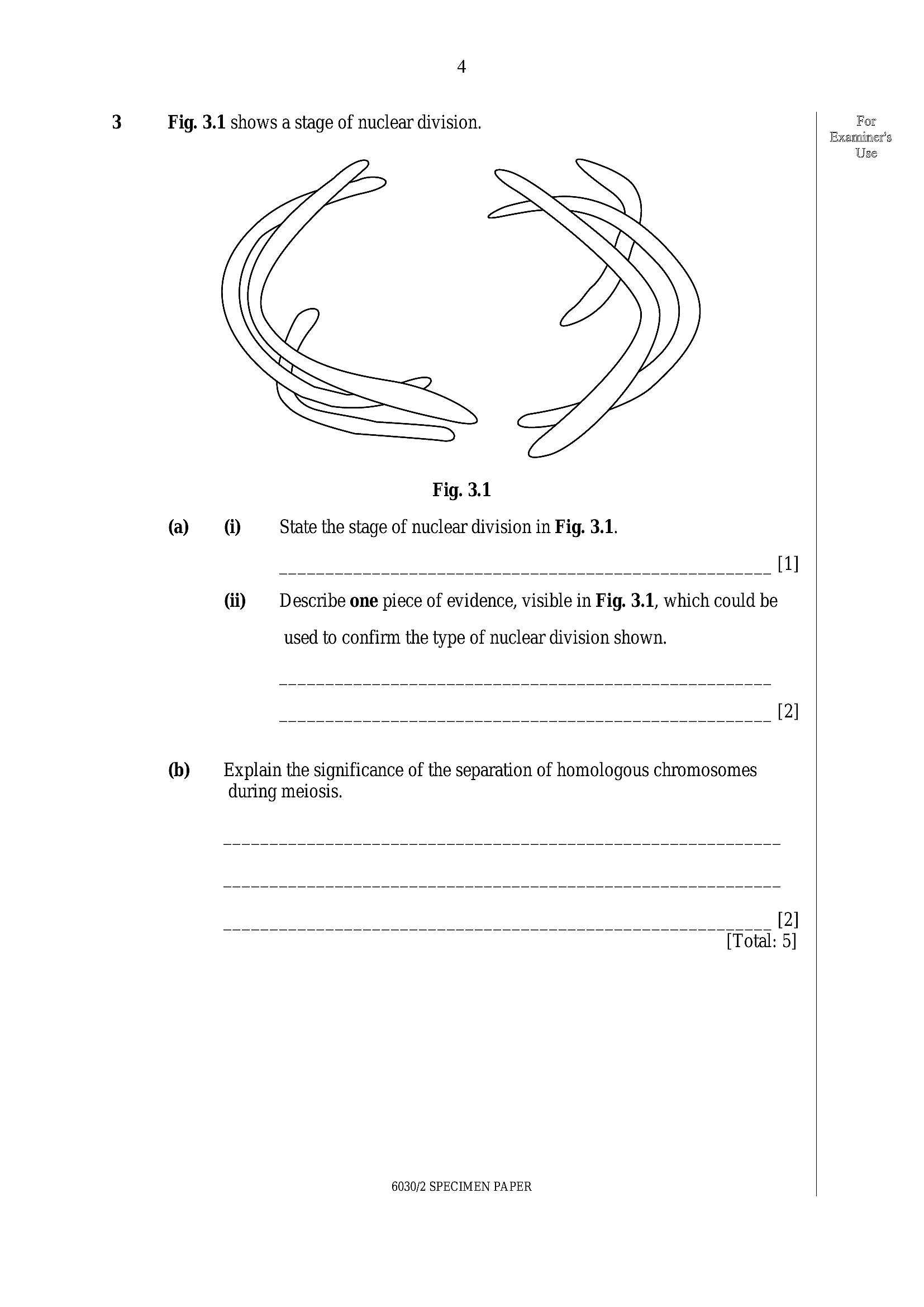
3Fig. 3.1 shows a stage of nuclear division.
Fig. 3.1
(a) @ State the stage of nuclear division in Fig. 3.1.
di Describe one piece of evidence, visible in Fig. 3.1, which could be
used to confirm the type of nuclear division shown.
(b) Explain the significance of the separation of homologous chromosomes
during meiosis.
6030/2 SPECIMEN PAPER
For
Examiner's
Use
---
Page 5
Extracted Text
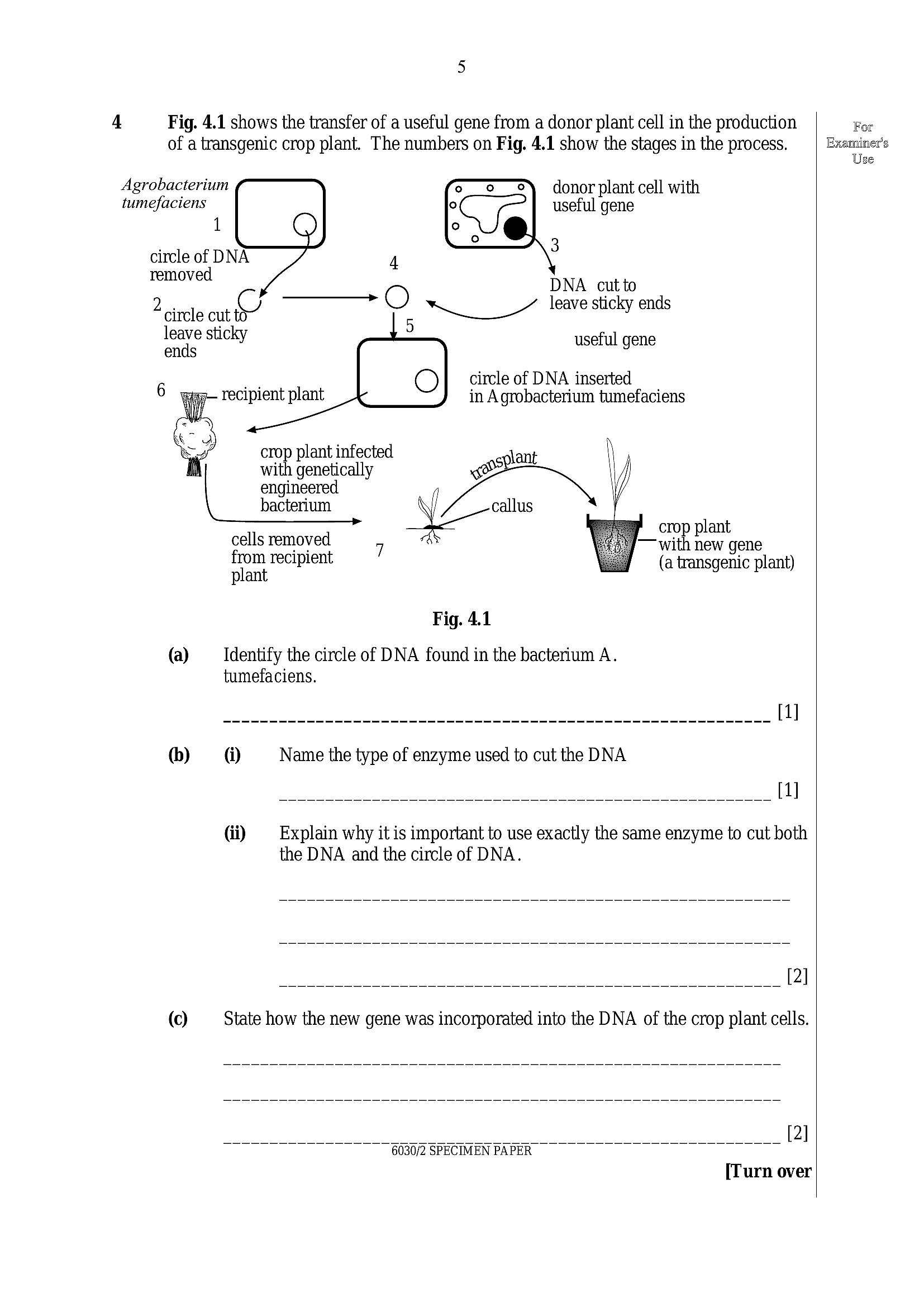
Fig. 4.1 shows the transfer of a useful gene from a donor plant cell in the production of a transgenic crop plant. The numbers on Fig. 4.1 show the stages in the process.Agrobacterium donor plant cell with
tumefaciens useful gene
1
. 3
circle of DNA 4
removed
DNA cutto
—__ >
2 circle cut O e NE!” leave sticky ends
leave sticky useful gene
ends
_ circle of DNA inserted
recipient plant in Agrobacterium tumefaciens
crop plant infected
HK with genetically Se ant
engineered
bacterium , / _-callus
crop plant
cells removed 7 — with new gene
from recipient (a transgenic plant)
plant
Fig. 4.1
(a) Identify the circle of DNA found in the bacterium A.
tumefaciens.
ob) Name the type of enzyme used to cut the DNA
(ii) Explain why it is important to use exactly the same enzyme to cut both
the DNA and the circle of DNA.
(©) State how the new gene was incorporated into the DNA of the crop plant cells.
6030/2 SPECIMEN PAPER
[Turn over
For
Examiner's
Use
---
Page 6
Extracted Text
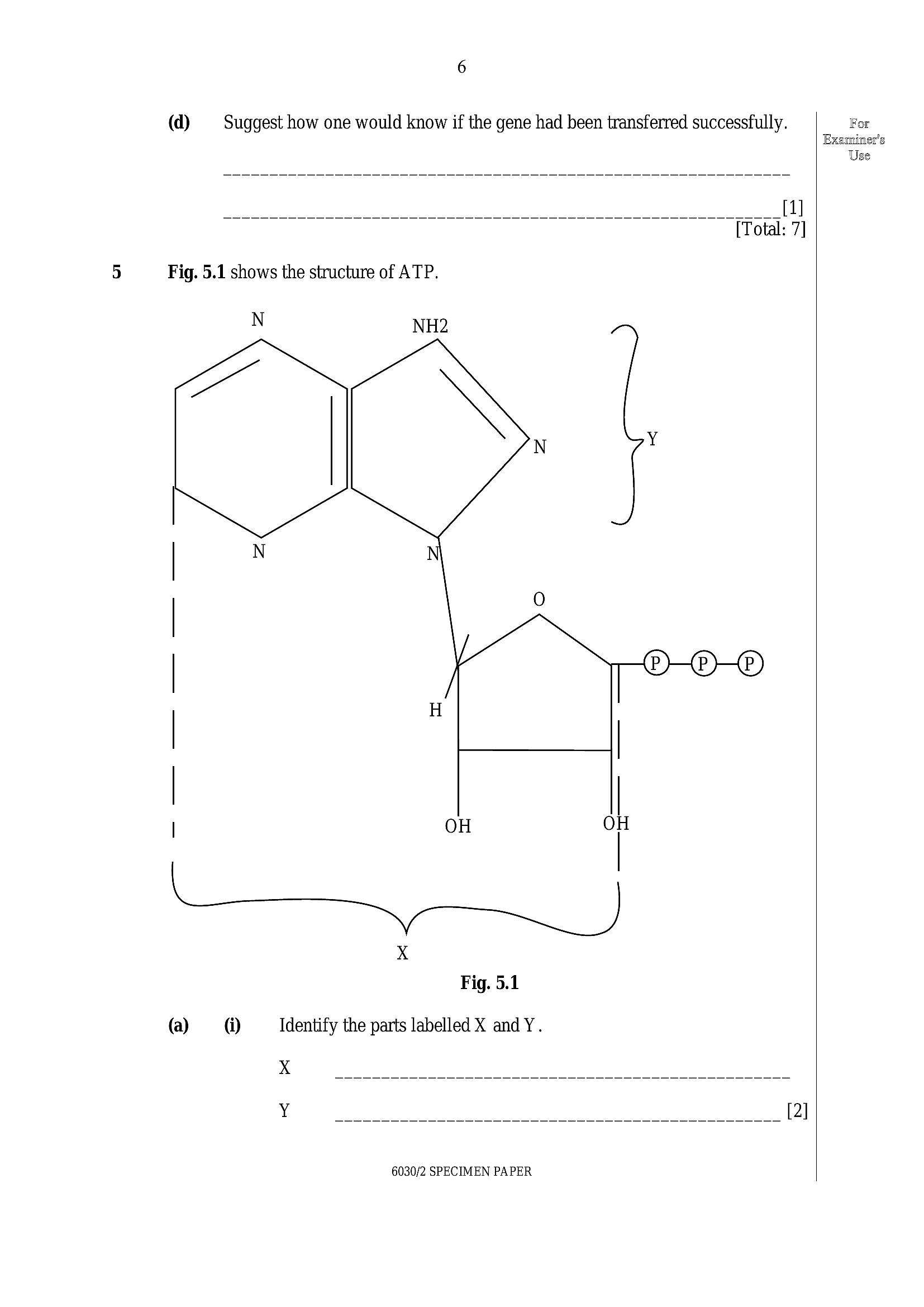
(d) Suggest how one would know if the gene had been transferred successfully. For Examiner's ve “Une § a [1] [Total: 7]Fig. 5.1
(a) @ Identify the parts labelled X and Y.
6030/2 SPECIMEN PAPER
---
Page 7
Extracted Text
(b) State precisely one site in a cell where ATP is synthesised.(©) Explain why ATP is regarded as the universal currency of energy in all
living organisms.
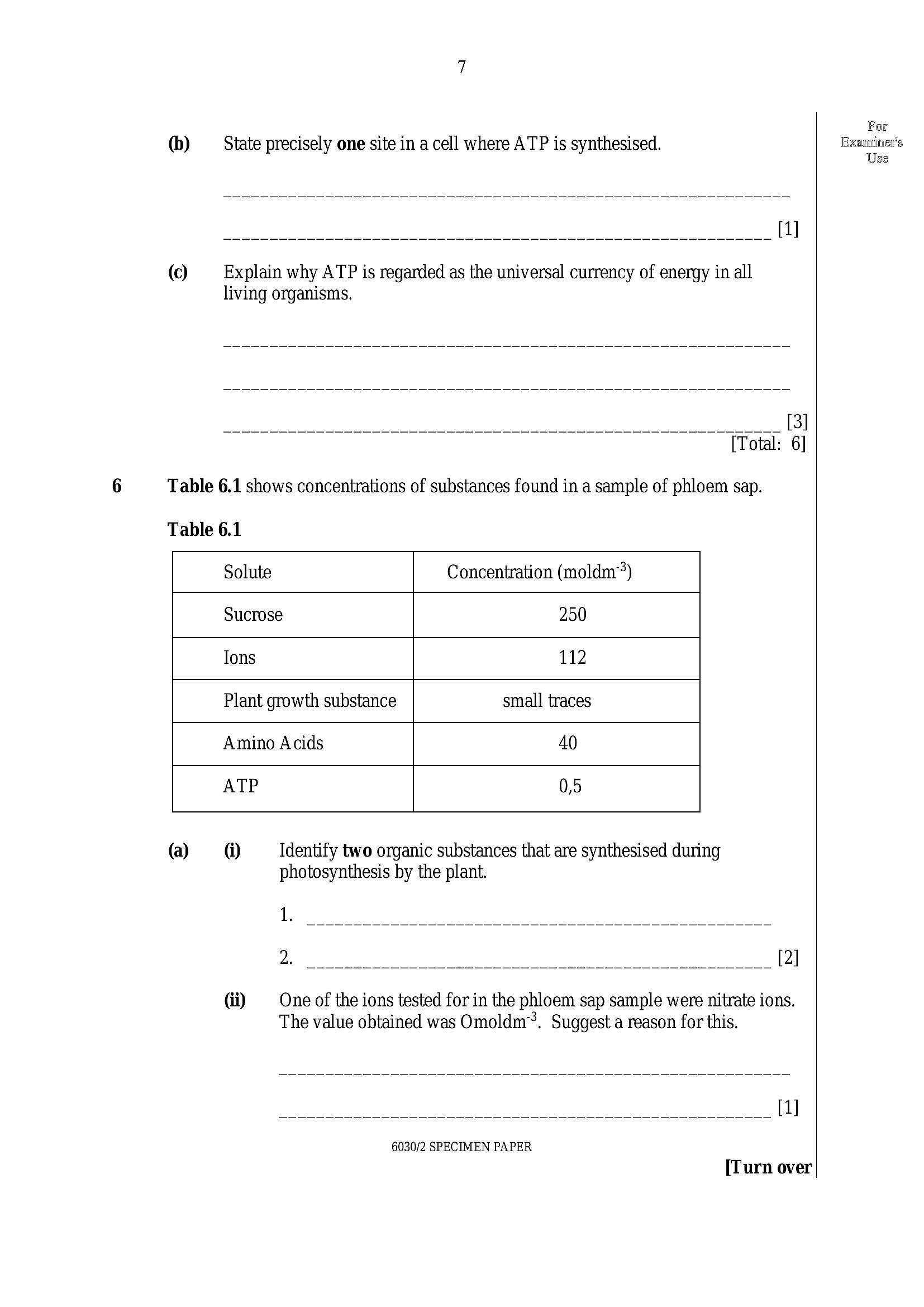
Table 6.1 shows concentrations of substances found in a sample of phloem sap.
Table 6.1
Solute Concentration (moldm’)
Sucrose 250
Ions 112
Plant growth substance small traces
Amino Acids 40
ATP 0,5
(a) @ Identify two organic substances that are synthesised during
photosynthesis by the plant.
(ii) One of the ions tested for in the phloem sap sample were nitrate ions.
The value obtained was Omoldm. Suggest a reason for this.
6030/2 SPECIMEN PAPER
[Turn over
For
Examiner's
Use
---
Page 8
Extracted Text
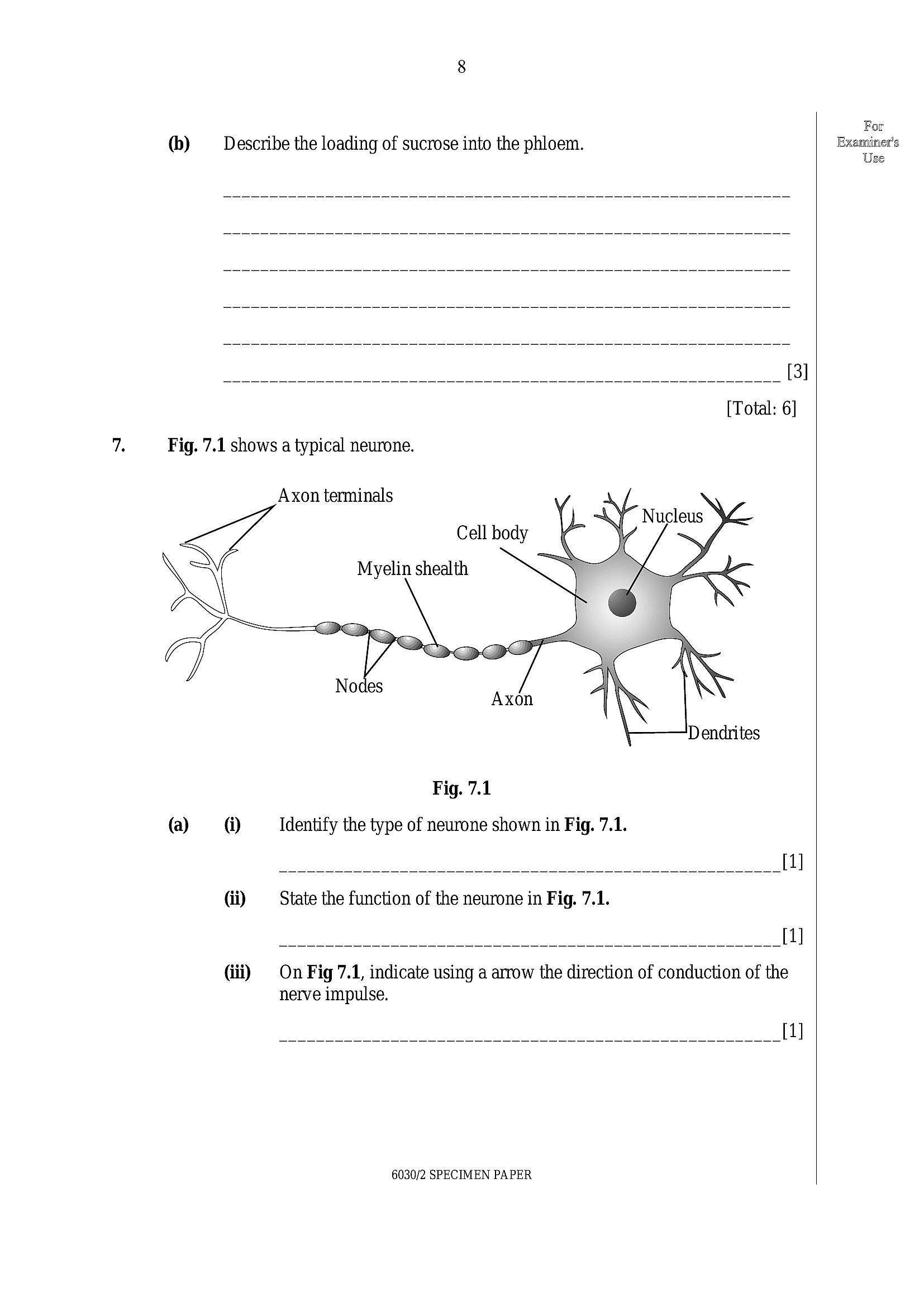
(b) Describe the loading of sucrose into the phloem.Fig. 7.1 shows a typical neurone.
Axon terminals
Cell body
Myelin shealth ¥
Fig. 7.1
(a) @ Identify the type of neurone shown in Fig. 7.1.
(ii) On Fig 7.1, indicate using a arrow the direction of conduction of the
nerve impulse.
6030/2 SPECIMEN PAPER
For
Examiner's
Use
---
Page 9
Extracted Text
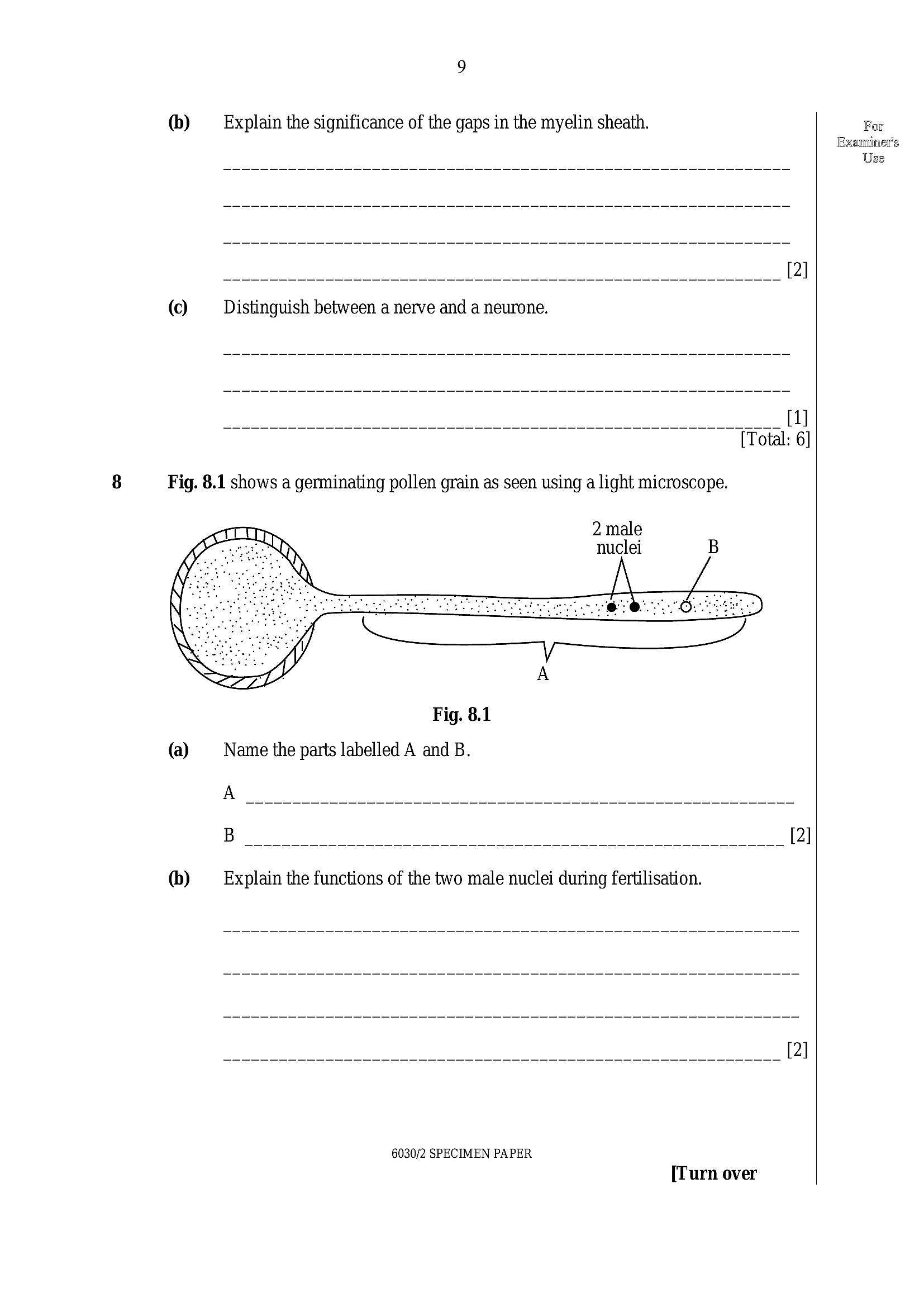
(b) Explain the significance of the gaps in the myelin sheath.() Distinguish between a nerve and a neurone.
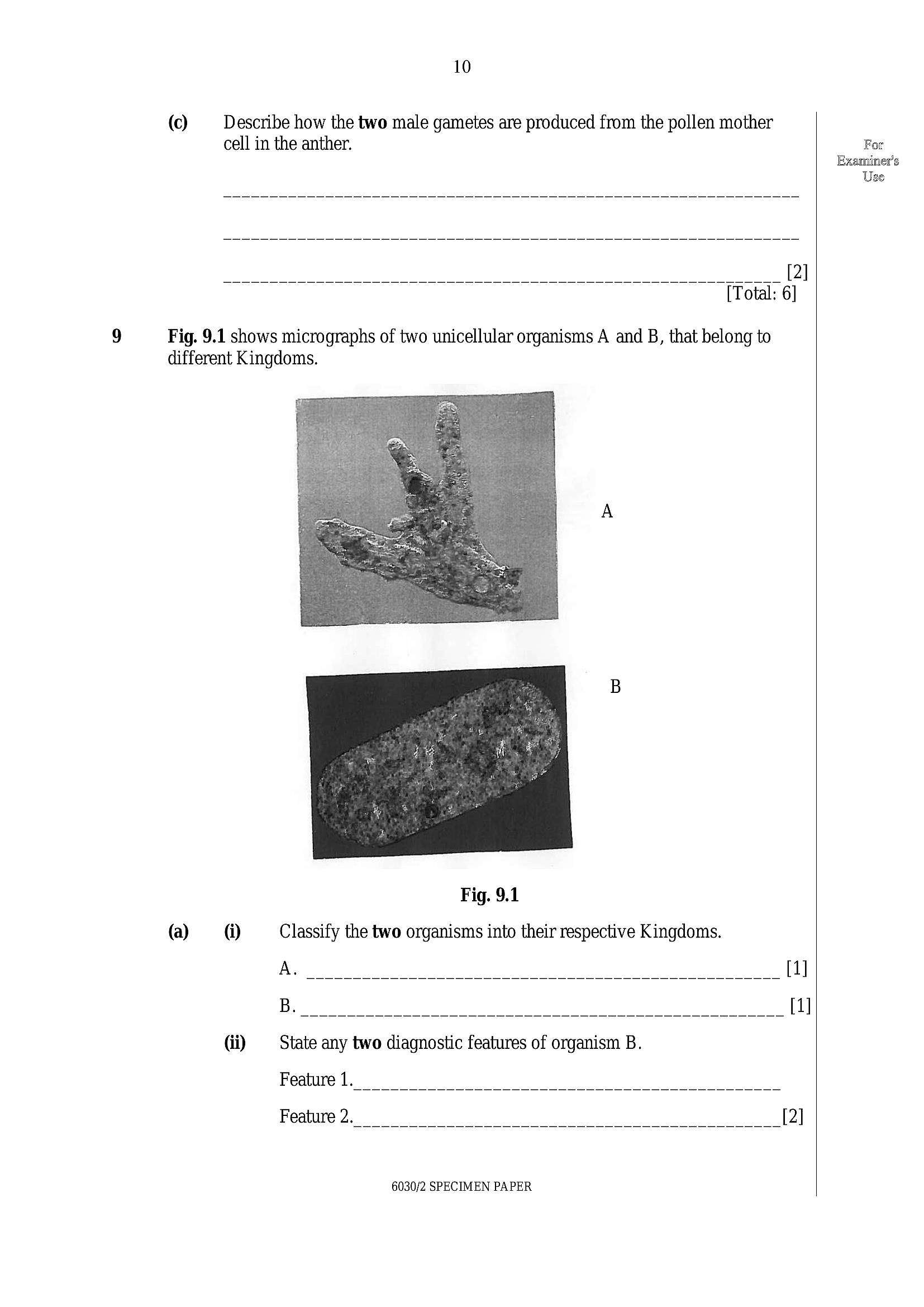
Fig. 8.1 shows a germinating pollen grain as seen using a light microscope.
2 male
nuclei
Fig. 8.1
(a) Name the parts labelled A and B.
(b) Explain the functions of the two male nuclei during fertilisation.
6030/2 SPECIMEN PAPER
[Turn over
For
Examiner's
Use
---
Page 10
Extracted Text
10(©) Describe how the two male gametes are produced from the pollen mother
cell in the anther.
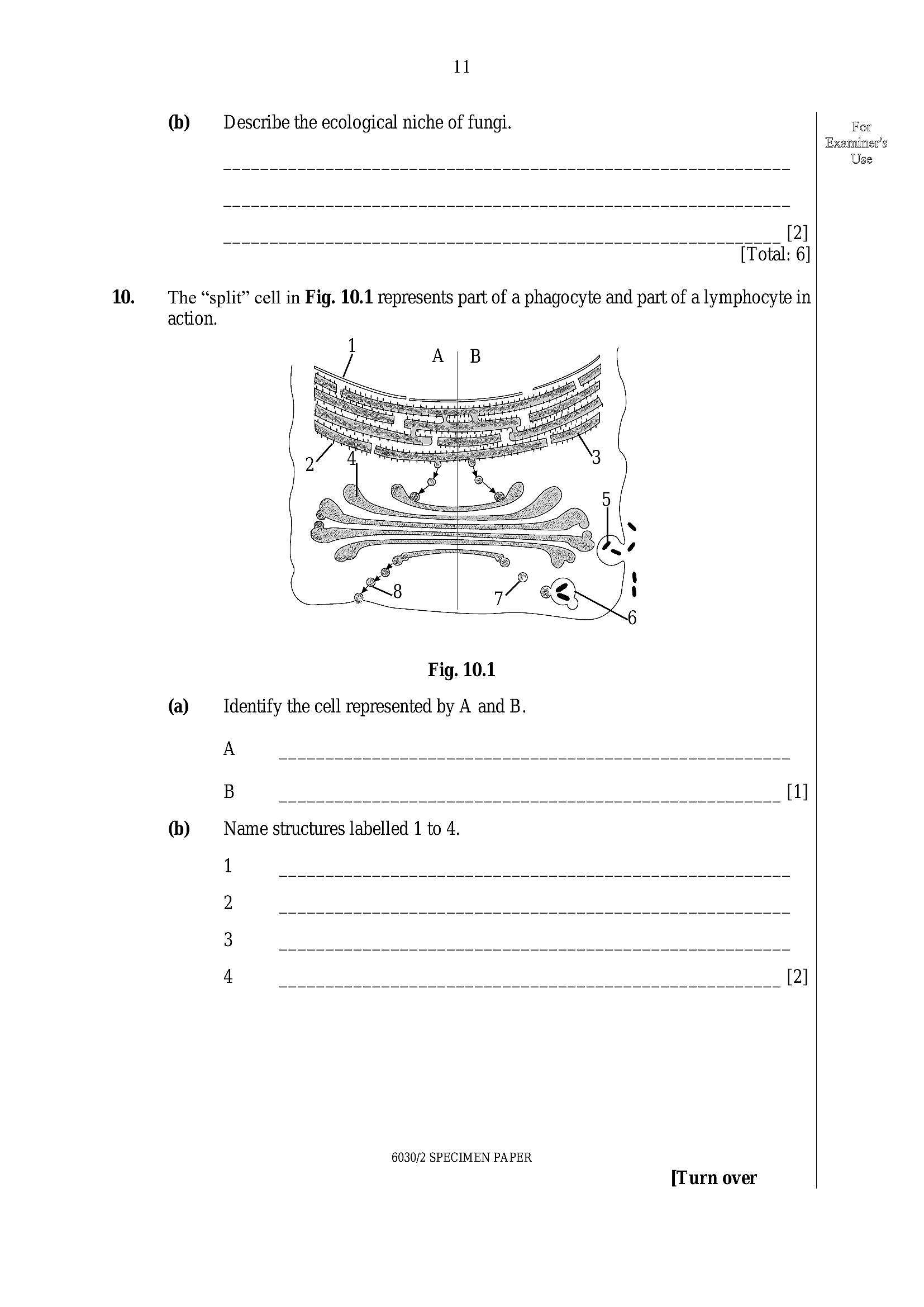
9 Fig. 9.1 shows micrographs of two unicellular organisms A and B, that belong to
different Kingdoms.
Fig. 9.1
@ @ Classify the two organisms into their respective Kingdoms.
AW {1]
B [1]
(ii) — State any two diagnostic features of organism B.
6030/2 SPECIMEN PAPER
For
Examiner's
Use
---
Page 11
Extracted Text
11(b) Describe the ecological niche of fungi.
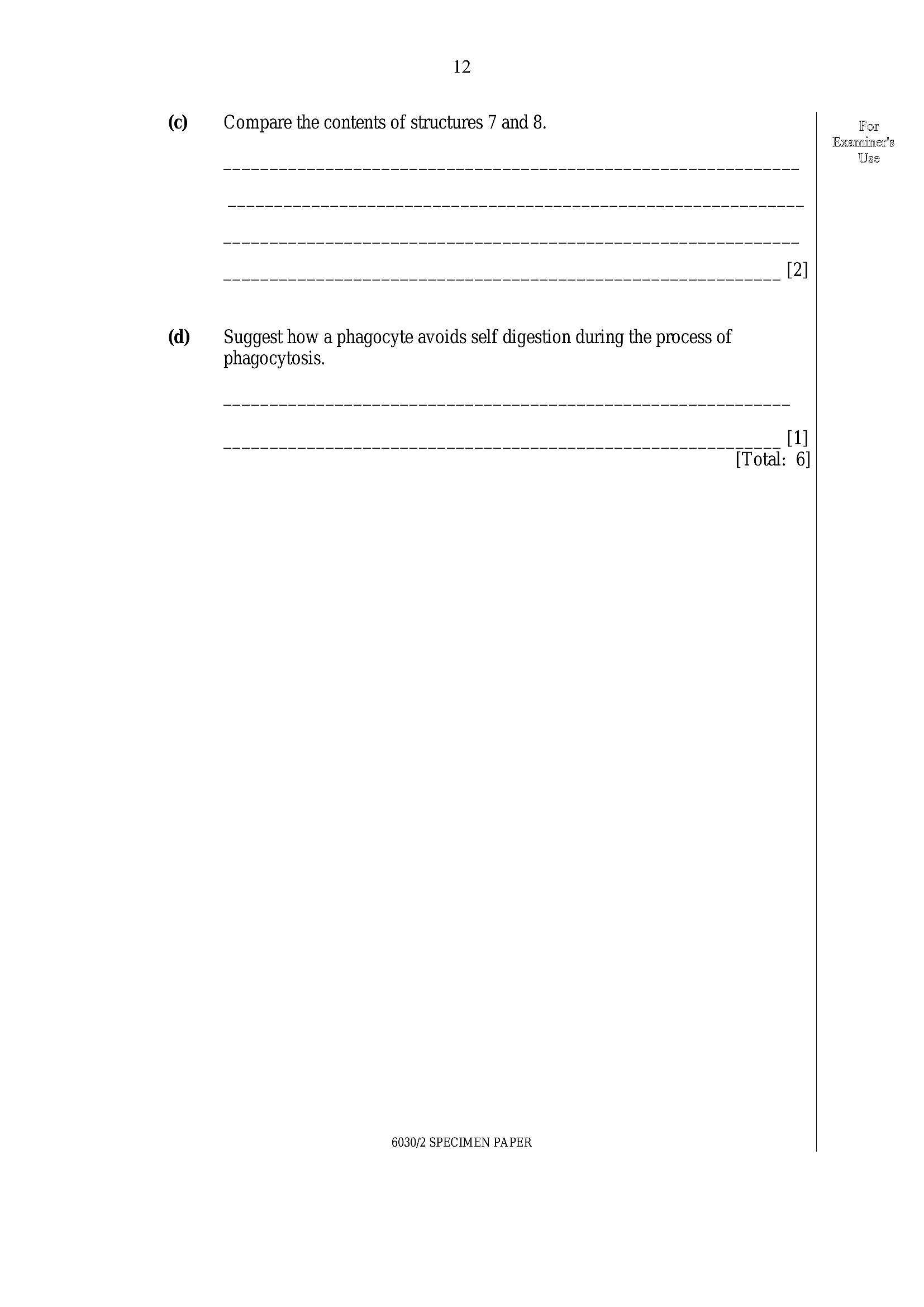
10. = The “split” cell in Fig. 10.1 represents part of a phagocyte and part of a lymphocyte in
action.
Fig. 10.1
(a) _—_ Identify the cell represented by A and B.
(b) Name structures labelled 1 to 4.
Ee WO DN
6030/2 SPECIMEN PAPER
[Turn over
For
Examiner's
Use
---
Page 12
Extracted Text
12() Compare the contents of structures 7 and 8. For
Examiner's
Use
(d) Suggest how a phagocyte avoids self digestion during the process of
phagocytosis.
6030/2 SPECIMEN PAPER
---